Business Expense Categories: How to Sort Every Receipt You Keep

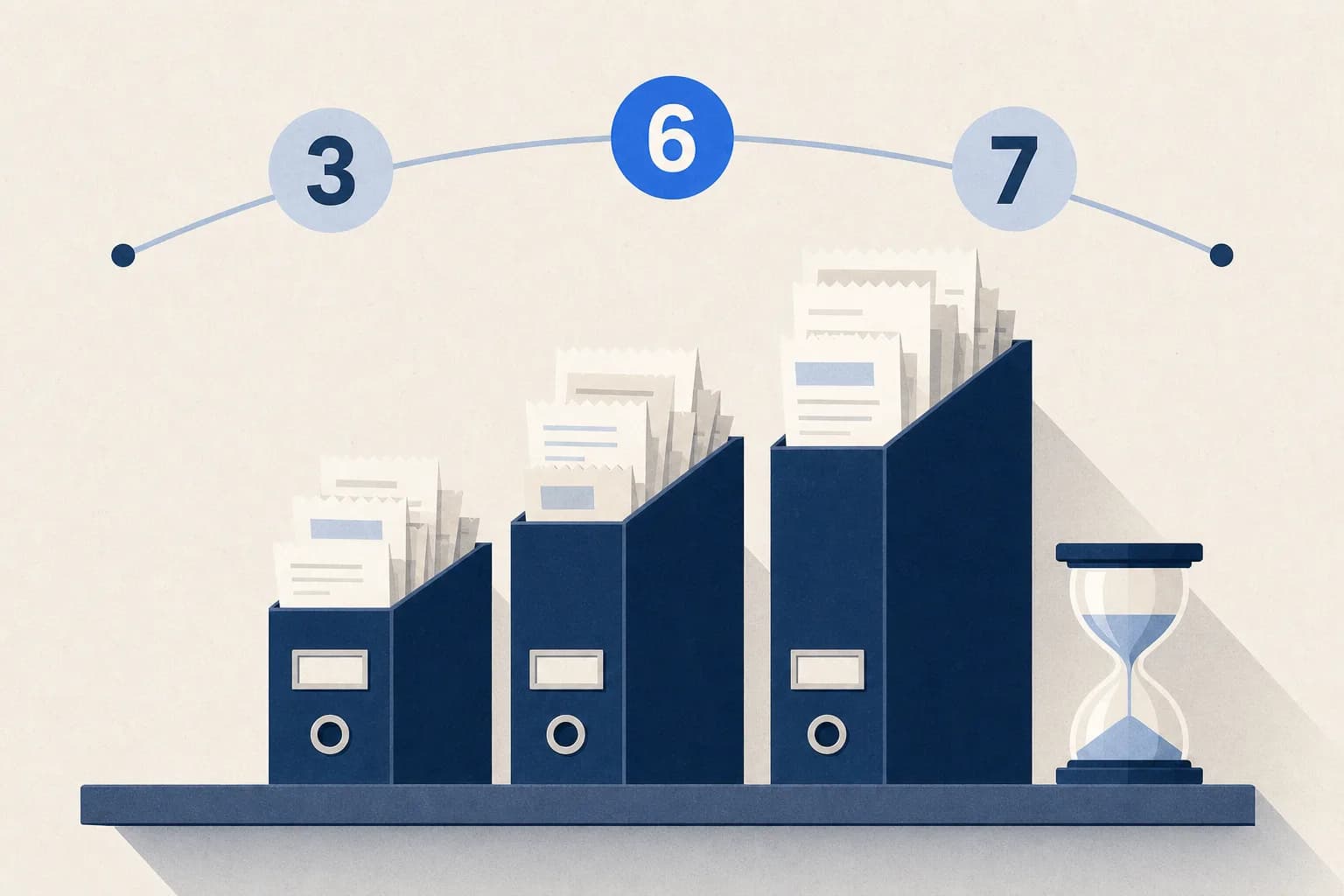
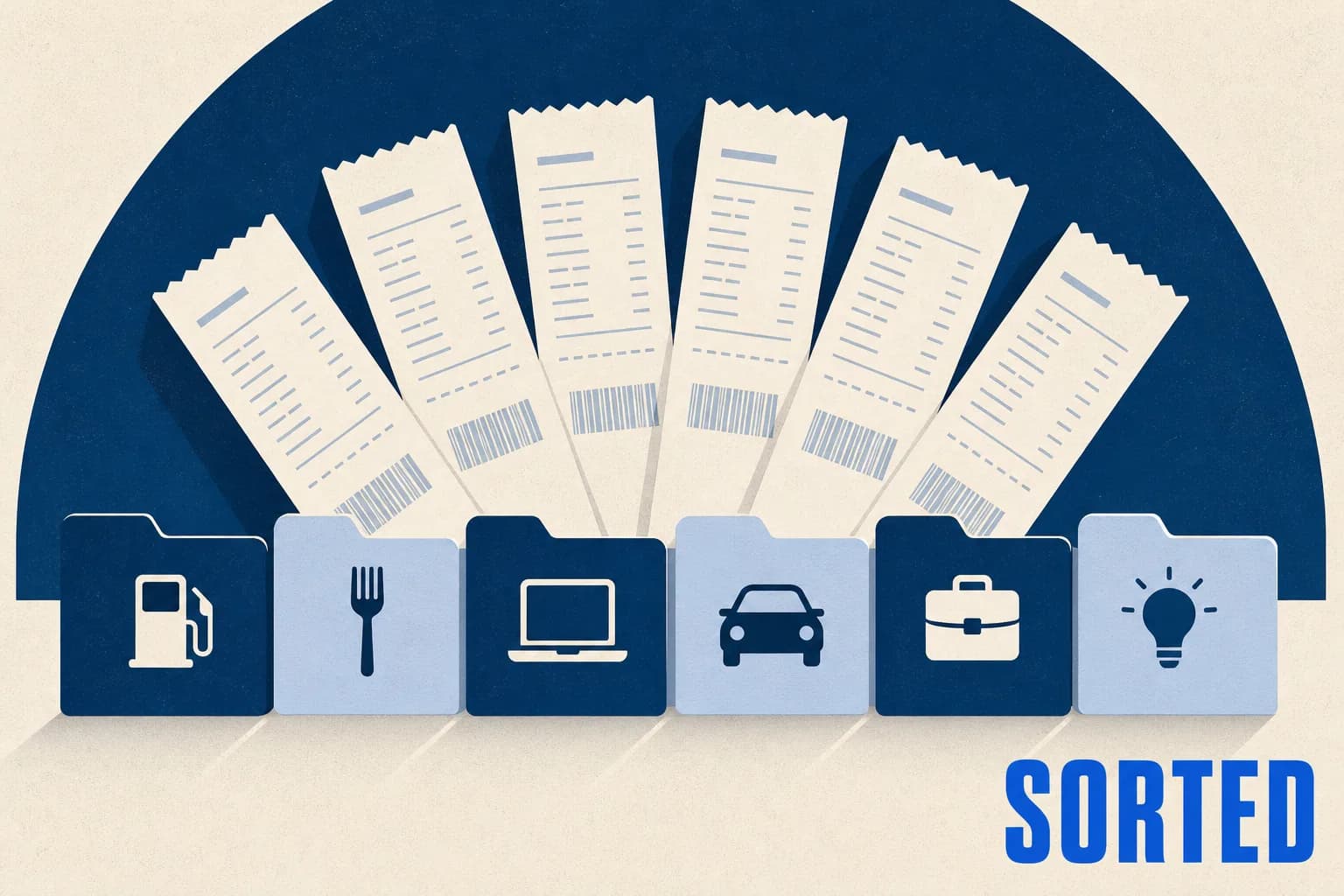
Expense categorisation looks like filing, so it gets treated like filing: a chore to be done quickly at the end of the quarter. It is actually a series of tax decisions. The category you assign determines whether a cost is fully deductible, half deductible, spread over seven years, or not deductible at all.
Get it right and your return more or less writes itself. Get it wrong and you either overpay — the most common outcome, and one nobody ever notices — or you claim something in a way that attracts questions. This guide covers the rules that decide a category, where each type of receipt lands, and the four judgement calls that cause almost all reclassifications.
The Test That Comes Before Any Category
Before asking which category an expense belongs to, establish whether it is deductible at all. US law sets a two-part test in IRC §162: a deductible business expense must be both ordinary and necessary.
- Ordinary — common and accepted in your trade. Not unusual for someone doing what you do.
- Necessary — helpful and appropriate for the business. Notably, this does not mean indispensable, which is a lower bar than most people assume.
The bar is lower than its reputation. A photographer buying a drone passes easily; an accountant buying the same drone has some explaining to do. The test is trade-relative, which is why the same receipt can be a clean deduction for one business and a disallowed one for another.
The UK equivalent under HMRC rules is "wholly and exclusively" for the purposes of the trade — a stricter formulation that leaves less room for mixed-purpose spending than the US test does.
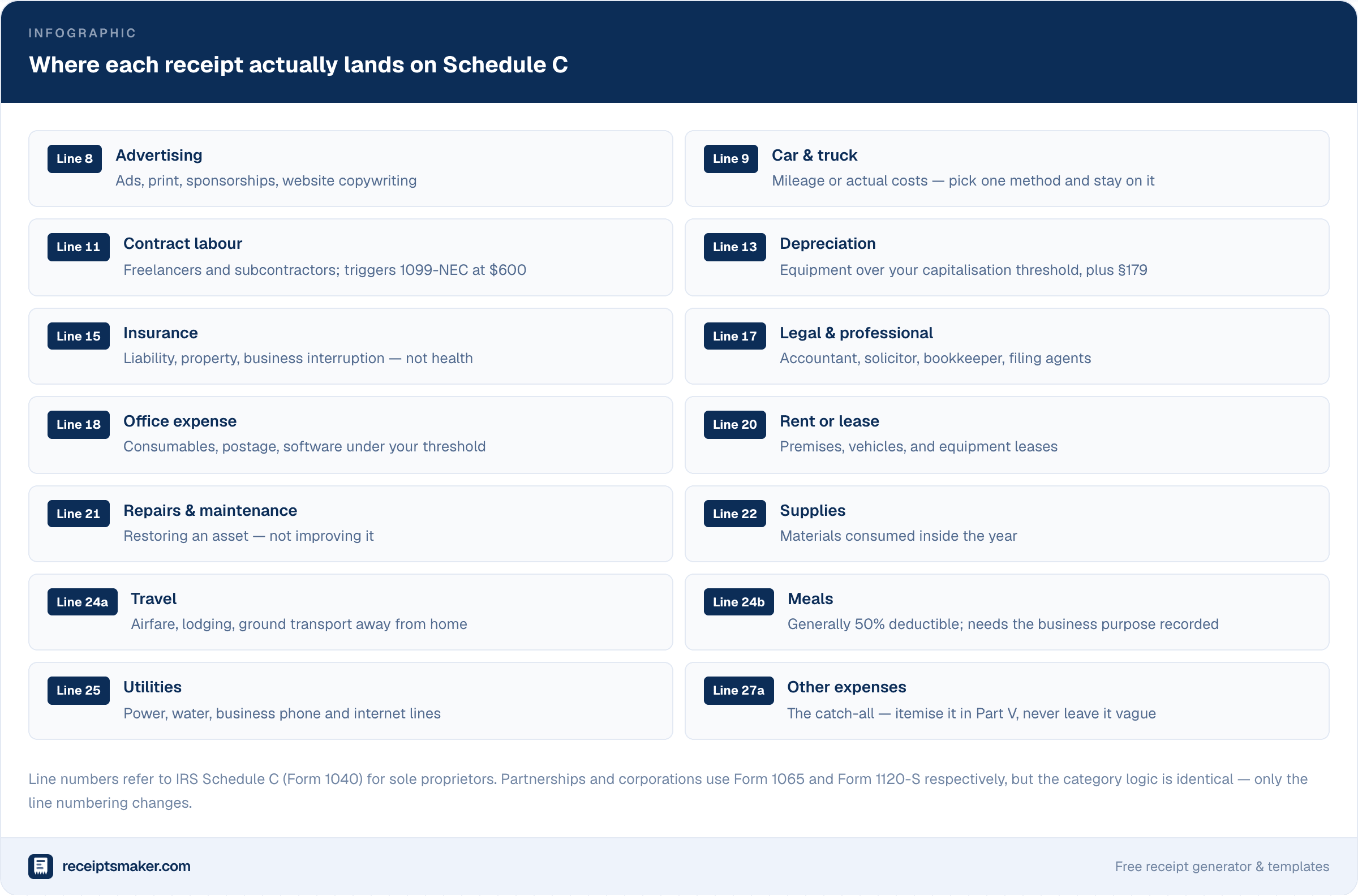
The Four Rules That Decide a Category
Once an expense qualifies, four questions place it. Work through them in order and almost every receipt resolves without judgement.
1. Is it consumed this year, or does it last?
This is the single most consequential split. Costs consumed within the year are expensed immediately. Costs that provide benefit over several years are capitalised and depreciated.
The practical mechanism is a capitalisation threshold — a policy stating that purchases below a certain figure are expensed regardless of useful life. Under the IRS de minimis safe harbour, businesses without an applicable financial statement may set this at up to $2,500 per item. Adopt a written policy, apply it consistently, and a £400 monitor stops being a depreciation question.
2. Is it a repair, or an improvement?
A repair restores something to its previous working condition and is deducted now. An improvement betters, restores or adapts the asset and must be capitalised. Replacing a broken window is a repair; replacing every window with double glazing is an improvement.
The distinction turns on the effect, not the cost. A cheap modification that materially extends an asset’s life is still an improvement.
3. Is it wholly business, or mixed?
Mixed-use costs — a phone, a car, a room in your home — are deductible only to the extent of business use, and that proportion has to rest on evidence rather than an estimate. A mileage log, an itemised phone bill, a floor-area calculation. "About 70%" is not a method, and it is the first thing challenged on examination.
4. Does a special rule cap it?
Several categories carry their own limits regardless of how ordinary or necessary they are. Meals are generally 50% deductible. Entertainment has been non-deductible in the US since the 2017 Tax Cuts and Jobs Act. Business gifts are capped at $25 per recipient per year — a limit set in 1962 and never indexed. Knowing which categories carry caps is most of the battle.
The Four Categories That Cause Almost Every Problem
Vehicle costs
Two methods, and the choice is more binding than it looks. The standard mileage rate multiplies business miles by a published per-mile figure. The actual expense method claims the business proportion of fuel, insurance, repairs, and depreciation.
The trap is switching. If you use actual expenses in the first year a vehicle is in service, you generally cannot switch to the standard rate for that vehicle later. Choosing the standard rate first preserves your options. Either way, contemporaneous mileage records are required — a log reconstructed at year end is exactly what an examiner is trained to spot. Keep your fuel receipts and repair receipts even under the mileage method, since parking and tolls remain separately deductible.
Meals and entertainment
Since 2018 these have been treated very differently: business meals are generally 50% deductible, while entertainment is not deductible at all. The practical consequence is that a single evening can produce two receipts with opposite tax treatment — the dinner is half deductible, the theatre tickets afterwards are nothing.
Meals also carry an extra substantiation requirement: the business purpose and the people present must be recorded. The receipt alone is not sufficient, which is why a two-second note on the restaurant receipt at the time is worth more than an hour of reconstruction later.
Home office
Deductible only where a space is used regularly and exclusively for business. Exclusively is the operative word — a dining table used for work is not a home office, no matter how many hours are spent at it.
The simplified method offers a flat rate per square foot up to a cap and requires no expense records at all. The regular method claims the business-use percentage of actual housing costs and generally yields more, at the price of proper record-keeping. Note that employees cannot claim this deduction in the US following the 2017 reforms; it is available to the self-employed.
Contractors versus employees
Not strictly a category question, but it sits in the same workflow and carries more risk than any other item here. Payments to contractors go on one line; wages go through payroll with tax withholding and employer contributions.
Misclassifying an employee as a contractor exposes the business to back taxes, interest and penalties, and the classification depends on the degree of control exercised — not on what the contract says or what the worker prefers. In the US, contractor payments of $600 or more in a year trigger a Form 1099-NEC.
What Is Never Deductible
Shorter than the deductible list, and worth knowing so these receipts can be set aside immediately rather than argued over:
- Personal, living and family expenses — the general bar under IRC §262.
- Fines and penalties paid to a government — parking tickets, late filing penalties, regulatory fines.
- Political contributions and lobbying costs.
- Entertainment in the US, since 2018.
- Commuting between home and a regular place of work — this is personal travel, however inconvenient it feels.
- Clothing suitable for everyday wear, even where bought specifically for work. Protective gear and genuine uniforms are deductible; a suit is not.
The commuting rule surprises people most. Travel between two work locations is deductible; travel from home to your regular workplace is not.
A Workflow That Holds Up
The failure mode is always the same: a shoebox categorised in a single session months later, by which point nobody remembers the business purpose of a £60 dinner in March.
- Capture at the point of spend. Photograph the receipt when you get it. Thermal print fades, and a receipt photographed in year three preserves nothing — see what is a thermal receipt.
- Annotate immediately. Business purpose and attendees for meals, project or client for travel. Ten seconds now, impossible to reconstruct later.
- Categorise weekly, not annually. Fifteen minutes a week beats two days in January, and the details are still in your head.
- Reconcile monthly against the bank. This is what catches the expense with no receipt and the receipt with no matching payment.
- Review categories quarterly. Watch for the catch-all growing. A large "other expenses" figure is a genuine audit flag, and Schedule C requires it to be itemised in Part V anyway.
The businesses in how 500 small businesses simplified bookkeeping reported the same thing: the gain was not the deduction they found but the time they stopped losing to reconstruction.
Where a receipt is genuinely gone, a written declaration recording the expense contemporaneously is the accepted remedy — the format is covered in our missing receipt declaration guide. It is a fallback, not a system: a return supported largely by declarations rather than receipts invites exactly the scrutiny you are trying to avoid.
Conclusion
Categorisation is a tax decision dressed as an admin task. Establish deductibility first with the ordinary-and-necessary test, then run the four rules: consumed or lasting, repair or improvement, wholly business or mixed, and whether a special cap applies. That places nearly every receipt.
Reserve your attention for the four difficult categories — vehicles, meals, home office and worker classification — because that is where the reclassifications and the penalties actually occur. And capture receipts at the moment of spend, with a note of why. Every hard problem in this article is easy at the point of purchase and expensive nine months later. If you need to issue receipts as well as file them, our templates and free generator produce documents carrying the fields these rules require.